Table of Contents
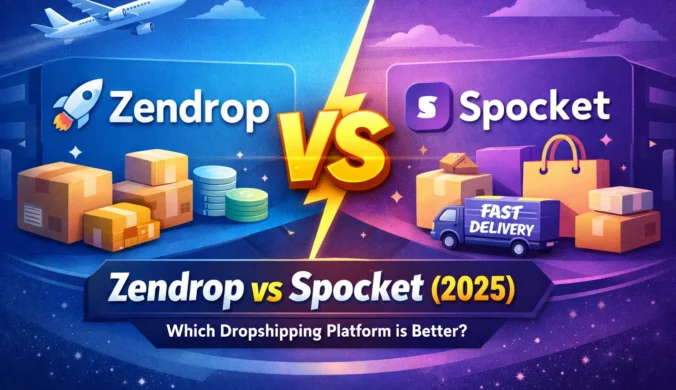
Last updated: May 30, 2026. Zendrop and Spocket are two of the most common first choices for beginners, but the better option depends on your billing control, supplier workflow, and daily execution style in the first 90 days.
In Summary
For beginners in 2026, Zendrop is often attractive when you want guided growth and flexible billing paths, while Spocket is attractive when you want clear subscription structure and curated supplier browsing. The better platform is the one you can execute consistently.

Why Beginners Compare Zendrop and Spocket
Beginners compare Zendrop and Spocket because both platforms promise faster setup, supplier access, and store workflow acceleration. The real difference is not brand messaging. The real difference appears in billing structure, renewal behavior, and how quickly you can diagnose profit leaks when product or shipping costs shift.
If your team is new, you need a platform that gives clean visibility into trial windows, active billing cycle, and what triggers plan changes. Both Zendrop and Spocket provide useful documentation, but the learning curve is still different in practice.
Zendrop for Beginners: Strengths and Risks
Zendrop is strong for beginners who want scalable onboarding with clear plan references and a documented usage-based path in Shopify contexts. Many users like how Zendrop explains linked-product billing logic and plan progression, because it helps forecast costs as product catalogs grow.
- Strength: documented plan models and product-linked billing behavior.
- Strength: support documentation for billing, product pricing dynamics, and shipping calculation logic.
- Risk: beginners can underestimate cost shifts if they do not monitor linked product counts and renewal dates weekly.
Read first: #19 Zendrop Promo Code 2026.
Spocket for Beginners: Strengths and Risks
Spocket is strong for beginners who want straightforward subscription choices and clear policy references for billing history, cancellation flow, and plan selection. A beginner can move faster on Spocket when the decision path is monthly validation first, annual commitment later.
- Strength: easy-to-understand subscription framing for starter users.
- Strength: policy documentation around renewal and account billing actions.
- Risk: beginners who ignore renewal timing can lose margin even if initial discount looks good.
Read first: #20 Spocket Coupon Code 2026.
Zendrop vs Spocket: Decision Framework for First 30 Days
To choose between Zendrop and Spocket, run one controlled 30-day test. Do not switch mid-week based on emotion. Track four numbers weekly: gross margin, order processing friction, supplier consistency, and billing exposure. If one platform repeatedly wins in three of four metrics, keep it as your primary stack.
- Start with one niche and a narrow SKU set.
- Track real order economics, not theoretical margin.
- Document renewal dates in a shared operations sheet.
- Only add complexity after the first profitable 30-day cycle.
Which Is Better for Beginners by Use Case?
- Choose Zendrop first if you value usage-based flexibility and guided growth paths.
- Choose Spocket first if you prefer subscription clarity and structured policy references.
- Use both only if disciplined with weekly cost control and supplier QA.
Both Zendrop and Spocket can work. Failure usually comes from weak operating discipline, not from tool brand alone.
CTA: Compare Live Deals Before You Choose
Before deciding between Zendrop and Spocket, validate active offers in one place.
Internal Resources You Should Read Next
Operator Planning Layer for New Teams
Most first-time teams fail because they treat platform selection as a one-time click, not as an operating system decision. Build a weekly operating layer that includes order review cadence, supplier response tracking, and refund-risk notes. Every Friday, compare expected gross margin against actual margin after fulfillment cost, processing delays, and platform-related charges. This rhythm gives you a stable feedback loop and keeps decision quality high when volume starts increasing.
Use one owner for billing controls and one owner for supplier quality checks. Even in small teams, role clarity reduces execution errors and prevents overlap confusion.
Financial Control Checklist Before Any Upgrade
Before upgrading any plan, run a simple checklist. Confirm stable conversion over at least two weekly cycles. Confirm that your top products maintain acceptable refund rates. Confirm that your shipping timeline and customer message workflows are consistent. Confirm that your current tool stack is being used fully before paying for additional features. This checklist prevents premature upgrades and helps protect cash flow during early growth.
If one checkpoint fails, hold plan expansion and focus on process corrections first. Operational discipline beats feature expansion in most early-stage stores.
Execution Signals That Matter More Than Feature Lists
Feature lists are useful for discovery, but execution signals should drive final decisions. Prioritize fulfillment consistency, issue-resolution speed, and predictable billing outcomes. If these signals improve over consecutive weeks, your platform fit is likely strong. If they degrade, your team should adjust workflow immediately. Keep a shared note of repeated friction points and convert each one into a standard operating procedure.
This method helps beginners avoid the common trap of switching platforms too frequently without measurable evidence.
Risk Management Workflow for Week 1 to Week 6
In week 1, validate account setup and billing visibility. In week 2, validate product and supplier consistency. In week 3, validate post-purchase communication speed. In week 4, validate margin durability after real order volume. In week 5, review whether support interactions are fast enough for your growth pace. In week 6, decide whether to maintain, optimize, or migrate based on evidence. This timeline gives structure to a decision that many beginners make emotionally.
Recommended Sourcing Tutorials
To set up automated fulfillment, see our detailed guide: How to Start Dropshipping with Zendrop.
To integrate local US/EU suppliers, follow our Shopify walkthrough: How to Start Dropshipping with Spocket.
FAQ
Can beginners succeed with Zendrop and Spocket?
Yes. Beginners can succeed with Zendrop or Spocket when they monitor pricing and renewal details weekly.
Is Zendrop cheaper than Spocket for all stores?
Not always. Effective cost depends on product volume, billing model, and how stable your catalog is during the billing cycle.
Is Spocket easier than Zendrop for first-time users?
Many beginners find Spocket straightforward for subscription flow, while others prefer Zendrop billing flexibility. Execution style matters.
Final Takeaway
Zendrop vs Spocket is a workflow decision, not a hype decision. Pick the platform that gives you the cleanest control over margin, renewal timing, and daily operations in your current stage.
Bottom CTA
Need the quickest next step? Check active Zendrop and Spocket offers now.